


Greg Chaisson From Baseball Dreams to Badlands and Atomic Kings
Some rock careers begin with a guitar in a bedroom and a clear plan. Greg Chaisson’s began with baseball gloves, Phoenix heat, a move to Los Angeles, a few near misses, and the kind of music taste that makes a bass player dangerous in the best possible way.
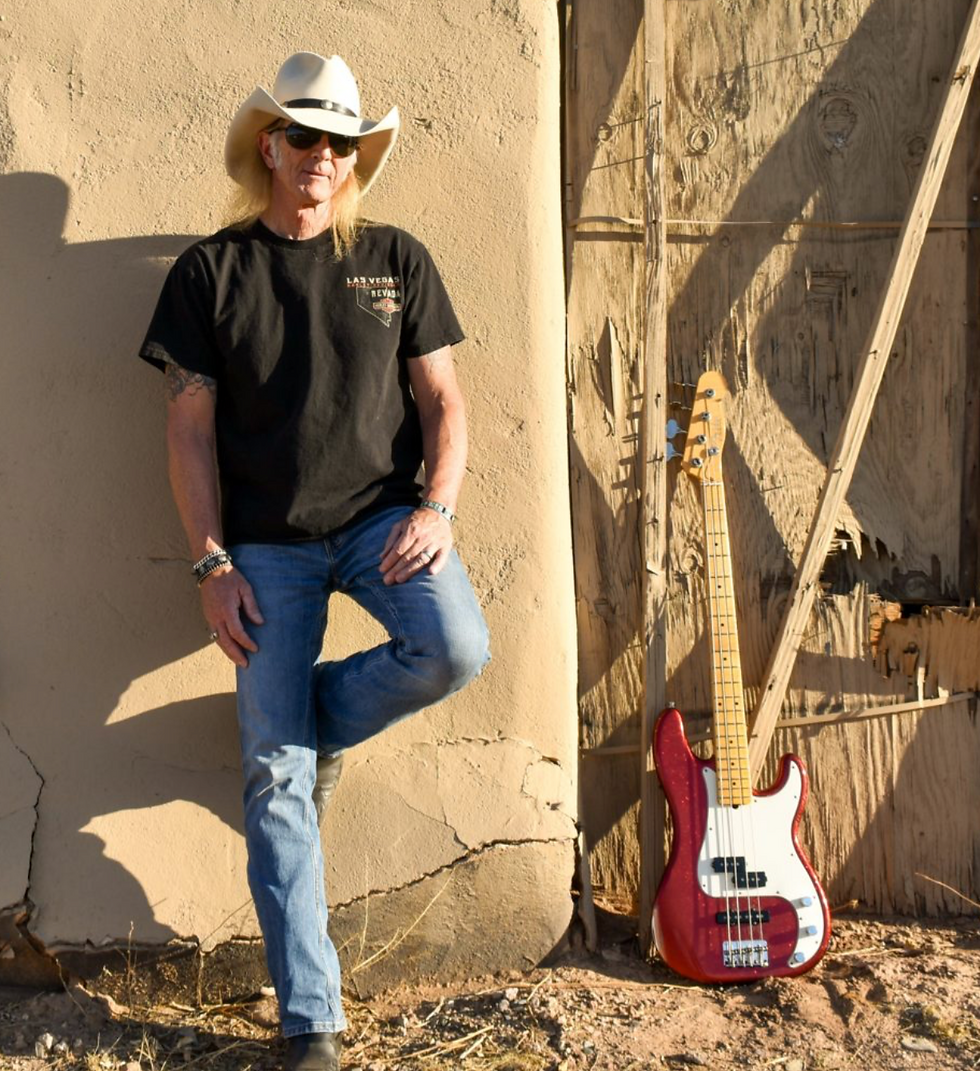
On the new edition of "The Rock'n'Blues Experience"with we met up with Greg backstage at "Bizarre Guitar and Drum"to look back on his 5 decades in music and its not all about nostalgia and great tales of the past because Greg's band"Atomic Kings"have just released their sophomore album.
Born in Ontario on 9 August 1958 and raised in Phoenix, Chaisson did not start out chasing the rock and roll life. He was a strong athlete, especially in baseball, and had the sort of ability that could have pointed him towards college sport. The catch was simple. He liked playing. He did not fancy the rest of the deal.
“I had no problem playing baseball. It was the going to college part that I wasn’t interested in.”
That line says plenty. Chaisson was not rejecting discipline. He was rejecting the wrong path. His real education would come from loud rooms, serious players, failed auditions, better auditions, and the long road from local hopeful to bassist in Badlands, then later Atomic Kings.

Phoenix gave him sport, but music gave him direction
Chaisson’s early life in Phoenix matters because it sets up the first turn in the story. He was not a musician hiding from the world. He was competitive, physically capable, and used to pressure. Those are handy traits for anyone walking into a rehearsal room where every player is listening for weakness.
Baseball may seem a long way from hard rock, but the overlap is real. Timing matters. Feel matters. You need to perform when people are watching. You need to know when to hold back and when to swing hard.
That last point became a big part of Chaisson’s bass style. The best hard rock bassists do more than follow root notes like obedient pets. They give a song weight, shape, and a bit of swagger. Chaisson’s playing has always carried that physical quality, solid enough to hold the floor, lively enough to make the track breathe.
His influences explain much of that. Grand Funk Railroad, The Who, and Humble Pie are not dainty reference points. They are bands with big rhythm sections, strong personalities, and players who understood that groove can hit as hard as volume and who doesn't love maximum groove.
Mel Schacher of Grand Funk Railroad brought muscle and movement. John Entwistle of The Who showed how bass could be a lead voice without wrecking the song. Humble Pie brought bluesy grit and a looseness that never sounded lazy. Put those lessons together and you can hear the roots of Chaisson’s approach: firm, melodic, and built for a band rather than a solo spotlight.
That is a useful distinction. Some players want every bar to announce them. Chaisson’s style tends to work more like a good engine. You notice it most when it is missing.
Los Angeles in 1982 was a trial by volume
Chaisson moved to Los Angeles in 1982, a well-timed and slightly mad decision. The city was packed with musicians trying to turn riffs, hairspray, and stubborn belief into record deals. Clubs were busy. Competition was fierce. Everyone seemed to be forming a band, leaving a band, auditioning for a band, or insisting their band was one showcase away from world domination for some it was true for the majority alas it was not if you were the type that couldn't take rejection then your stay in LA would be a short one.
For a bassist, LA could be heaven, if heaven came with parking problems and a high chance of being judged by someone wearing leather trousers at noon.
Chaisson did what musicians have always done in serious music cities. He went to shows. He watched. He met people. He auditioned. He tried to work out where he fitted in a scene that was moving fast and chewing up plenty of hopefuls.
The popular image of the 1980s LA rock world can be cartoonish now, all big hair and bigger choruses. But beneath the image was a tough working environment. Players had to be ready. A bad rehearsal could cost you a slot. A missed chance might not come back. If a band was close to breaking, the pressure rose even more, and even if there was a hint of cartoonish compared to today where with a computer, pro tools and a place to plug in you can produce an album or even worse get ai to do it for you the 80's were a very real environment, got no talent adios then and close the door when you leave.
That makes Chaisson’s Ratt story especially telling.

The Ratt offer came with a catch
Chaisson’s connection with Ratt came at a moment when the band was part of the rising LA hard rock wave. According to the account, he was offered a gig, but with a very specific condition: if the original bassist returned, Chaisson could lose the job.
That is both exciting and grimly practical. On one hand, a major opportunity is sitting in front of you. On the other, it comes with an escape clause sharp enough to draw blood.
Many musicians would still say yes. Of course they would. A foot in the door is still a foot in the door, even if the door has a habit of slamming. For Chaisson, the episode shows how unstable the scene could be. Talent mattered, but timing mattered just as much. So did health, luck, and whether someone else had already half-claimed the chair you were about to sit in.
He also ran into a more human obstacle: pneumonia. Illness kept him from performing when performance mattered. That kind of setback rarely makes the glossy version of a rock biography, but it is often where the real story lives. Nobody builds a career from perfect conditions. They build it from missed calls, awkward offers, bad timing, and the decision to keep showing up anyway.
There is a dry humour in imagining the supposed glamour of rock and roll running straight into pneumonia. Nothing says “sunset strip ambition” quite like needing rest, fluids, and possibly being told not to sing backing vocals.

The Ozzy audition raised the stakes
One of the biggest moments in Chaisson’s journey was auditioning for Ozzy Osbourne’s band. As the story goes, he spent three weeks in Inverness as part of that process. For any rock musician, an Ozzy audition is not just another try-out. It is a test with history breathing down your neck.
Ozzy’s bands have long been associated with high-level players. The bass chair is not decorative. The music needs weight, control, and enough personality to stand alongside guitarists who often attract most of the attention. Walking into that environment would test more than technique. It would test confidence, adaptability, and nerves.
Auditions at that level are strange beasts. You are not only proving you can play the songs. You are proving you can live inside the machine. Can you learn quickly? Can you take direction? Can you handle pressure without becoming difficult? Can you stand in a room with known players and still sound like yourself?
The story of the audition is told in detail in the video you can see on the main page needless to say the whole event was not without incident but basically in the end despite the fact Greg was the best player they had seen he didn't get the gig simply because the look wasn't right.
Chaisson did not become Ozzy’s long-term bassist, but the audition itself is a strong marker of where he stood. You do not get that close by accident. The door opens only if people already believe you might belong in the room.
That is one of the patterns in his career. Even when a specific opportunity did not turn into the final destination, it moved him closer to the right one.

Badlands put the pieces together
Badlands remains the band most closely linked with Chaisson’s name, and for good reason. The group brought together serious firepower: Jake E. Lee, known for his work with Ozzy Osbourne, vocalist Ray Gillen, drummer Eric Singer, later drummer Jeff Martin, and Chaisson on bass.
On paper, it looked like a hard rock supergroup. In practice, Badlands had something more valuable than a neat résumé. The band had chemistry.
Their sound stood apart from much of the late 1980s hard rock pack. Badlands leaned into blues, soul, and heavy groove. The songs had muscle, but they also had swing. Ray Gillen’s voice brought drama without losing warmth. Jake E. Lee played with bite and flair. The drums hit hard. Chaisson’s bass helped glue the whole thing together.
This is where those early influences make sense again. Grand Funk, The Who, and Humble Pie were not just records he liked. They were part of the musical vocabulary that suited Badlands. The band could be heavy without turning stiff. It could nod to classic rock, blues and hard rock roots without sounding like a museum piece.
Chaisson’s role was central because music like that needs a bassist who understands space. Too little and the songs lose power. Too much and the groove gets crowded. His playing gave the band a grounded, rolling force, the kind that lets a guitarist stretch and a singer soar without the track floating away.
Badlands achieved significant success and built a loyal following. The band’s reputation has also endured because it offered a different flavour from some of its peers. It was not just chasing radio polish. It had dirt under its nails.
Why his bass playing still stands out
There are bassists who impress by racing around the fretboard. Chaisson’s strength is different. He plays like someone who cares about songs first, but still refuses to disappear.
A few traits define his work:
A strong pocket
His lines sit where the song needs them. That sounds simple until you hear a band without it.
Melodic movement
He does not treat the bass as a dull thud. His parts often move with purpose and help shape the mood.
Blues-based feel
Even in heavier settings, there is a human looseness in the playing. It gives the music warmth.
Band awareness
Chaisson listens like a musician who knows the bass can lead, support, or get out of the way, depending on the moment.
That last quality is underrated. Many rock bands are harmed not by a lack of talent, but by too much talent pointed in the wrong direction. Chaisson’s playing suggests judgement. He knows when to push and when to lock in. That is not flashy in a circus sense, but it is exactly what makes a rhythm section work.
Search for greg chaisson performances and the same thing comes through: the bass is not decoration. It is architecture.

Atomic Kings brings the story forward
Chaisson’s story does not stop with Badlands, and that is part of what makes it interesting. His newer band, Atomic Kings, has a brand-new album out, putting him back in the frame not as a nostalgia act, but as an active musician still making fresh work.
That matters. Rock history can be unfair to players from well-loved bands. It freezes them in one era, usually the era with the biggest hair or the most famous record sleeve. But musicians are not museum exhibits. They keep writing, recording, experimenting, and arguing about snare sounds in rooms with no windows.
Atomic Kings gives Chaisson another setting for the qualities that have marked his career: groove, weight, bluesy hard rock instincts, and a clear sense of what a band needs. For long-time listeners, the appeal is obvious. You get a link to the Badlands spirit without asking him to simply repeat the past.
For newer listeners, Atomic Kings can work as a way in. You do not need to know every chapter of 1980s and 1990s hard rock to hear when a rhythm section has authority. You only need ears and a reasonable tolerance for volume.
There is also something pleasing about a musician with Chaisson’s background still pushing forward. After the almost-gigs, the auditions, the illness, the big band, and the changing tastes of the music business, he is still in the game. Baseball did not get him, college did not tempt him, and rock and roll, against all sensible advice, appears to have kept him.
The thread running through it all
Greg Chaisson’s career is not a tidy straight line. That is why it feels real. He went from a Canadian birthplace to a Phoenix upbringing, from promising athlete to working musician, from LA auditions to major opportunities, from Ratt’s conditional offer to Ozzy’s audition process, from Badlands to Atomic Kings.
The easy version would be to call it luck. The better version is timing plus persistence plus taste. Chaisson had the influences, the feel, and the toughness to keep moving through a scene that did not hand out guarantees.
His own quote about baseball and college still feels like the key. He understood early that being good at something does not mean it is your life. He chose the harder, louder, less predictable road. For listeners, that choice paid off.
Badlands gave him a lasting place in hard rock history. Atomic Kings shows he is not finished adding to it. And somewhere between the baseball diamond and the bass rig, Greg Chaisson found the role that suited him best: holding down the low end while the rest of the room catches fire.


Comments